What are lingual braces?
Braces fitted behind the teeth, also called lingual braces, are attached not to the outer surfaces but to the inner surfaces of your teeth. This keeps the treatment practically invisible to other people. Unlike removable aligners, these braces are firmly bonded to your teeth and therefore work 24 hours a day, 7 days a week.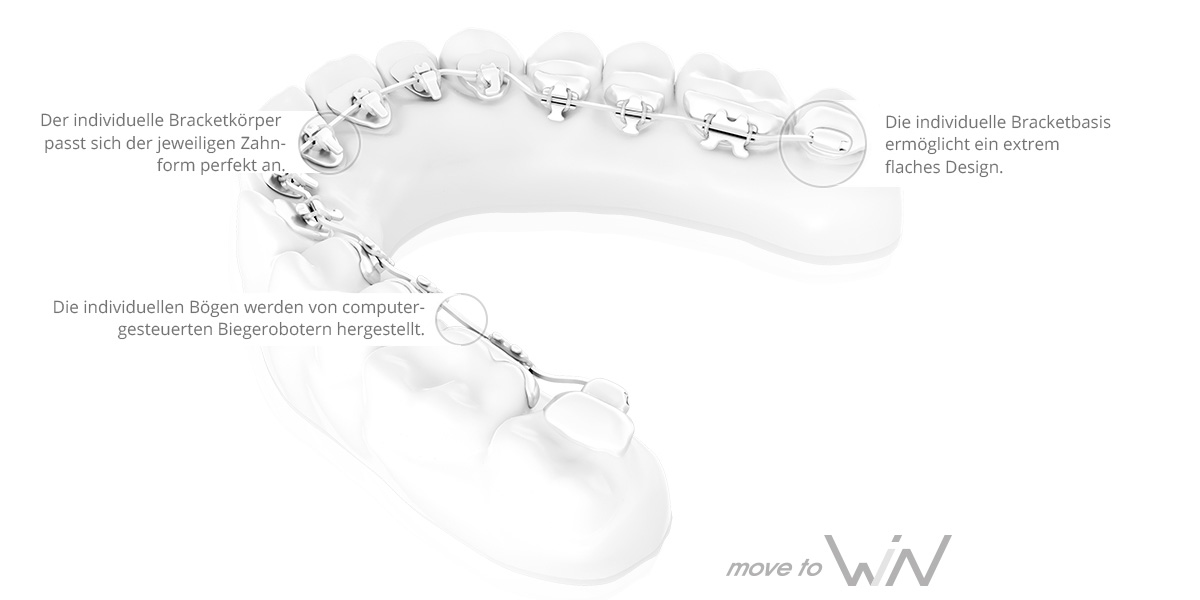
WIN lingual braces are fixed braces custom-made for you. Every bracket and every archwire is matched precisely to your teeth. This allows even complex tooth movements to be carried out very precisely. The goal is not only a beautiful smile, but also a functionally stable bite.
Who are WIN lingual braces suitable for?
WIN braces are suitable for practically all patients who want an aesthetic and at the same time effective correction of their teeth. They make particular sense for people who would rather not wear visible braces at work, at university or in everyday life.
- Teenagers who want inconspicuous treatment
- Adults with high aesthetic standards
- Patients with moderate to severe misalignment
- People who need precise three-dimensional tooth movements
- Patients looking for a fixed alternative to aligners
Whether WIN lingual braces are the best choice in your case is something we clarify during a personal consultation at the Eltz Institut. We analyse your tooth position, your bite, the space available and your personal wishes.
Why fixed lingual braces?
Many misalignments affect not only the visible crowns of the teeth but also the position of the tooth roots. This is precisely where fixed systems have a decisive advantage: they can move teeth in a controlled, three-dimensional way. This means that not only is the visible front improved, but the position of the teeth in the bone can also be adjusted precisely.
Removable systems are well suited to some cases, but reach their limits with more complex movements. WIN lingual braces, on the other hand, are always active, regardless of how diligently the patient remembers to cooperate. As a result, treatment is in many cases reliable, easy to plan and predictable.
The advantages of WIN braces at Eltz
1. Invisible from the outside
WIN braces sit on the inner surfaces of the teeth. As a result, they are usually not visible from the outside when you speak, laugh or go about your day. For many adults and teenagers, this is the most important advantage.
2. Fixed and therefore always active
The appliance stays on the teeth throughout the entire treatment. It can therefore work continuously without you having to remember to put it in or to wear it for long enough.
3. Precise three-dimensional tooth movements
With fixed lingual braces, both the crowns and the roots of the teeth can be moved in a targeted way. This is crucial if a high-quality result is to be achieved, both aesthetically and functionally.
4. Custom-made high-tech solution
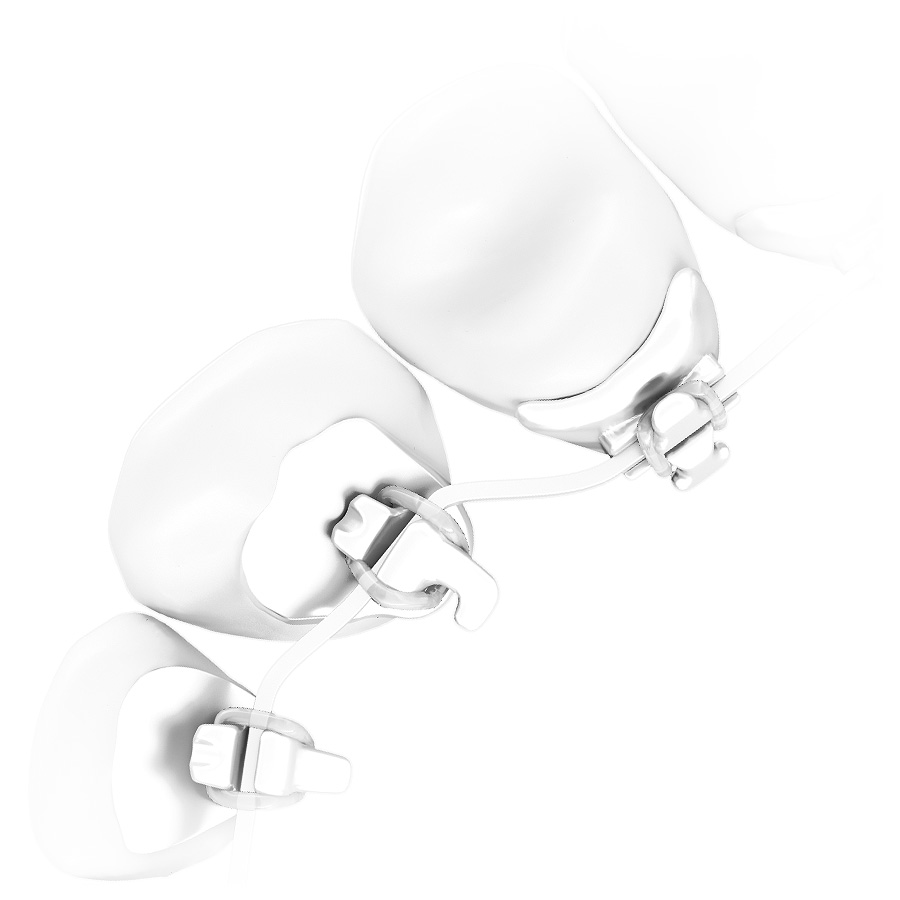
The WIN appliance is made individually for your teeth. The result is a precisely fitting, flat and comfortable solution tailored to your personal starting situation.
5. Comfortable thanks to an ultra-flat design
Modern manufacturing makes particularly flat brackets possible. This supports wearing comfort and makes it easier to get used to the braces in everyday life.
6. Fast visible improvements
Even though the braces are invisible from the outside, the results become visible over the course of treatment. Many patients are pleased to see the first positive changes after just a few weeks.
7. Attractive for children and teenagers too
With lingual braces, the risk of visible decalcification of the teeth is lower. Especially for younger patients, this is a relevant consideration when fixed treatment is needed.
WIN lingual braces: tailor-made for your teeth
The WIN appliance is not a standard solution; it is planned individually for each patient. Every detail is adapted to the shape and position of your teeth. The result is a treatment matched as precisely as possible to your teeth.
This individualisation is a great advantage, especially for demanding tooth movements. The aim is a correction that is not only aesthetically convincing but also remains stable in the long term. At the Eltz Institut, we place particular emphasis on planning treatment transparently and guiding it professionally, step by step.
Which misalignments can be treated with WIN?
WIN lingual braces are suitable for many moderate to severe misalignments. These include crowding, gaps between the teeth and crossbites, among others. The individual starting situation is always the deciding factor.
Crowding
With crowding, the teeth have too little space. The crowns of the teeth overlap, and in some cases the roots are also poorly positioned. Successful treatment therefore has to achieve more than just lining up the visible biting edges. With fixed lingual braces, the crowns and roots of the teeth can be placed precisely side by side and the teeth rotated exactly.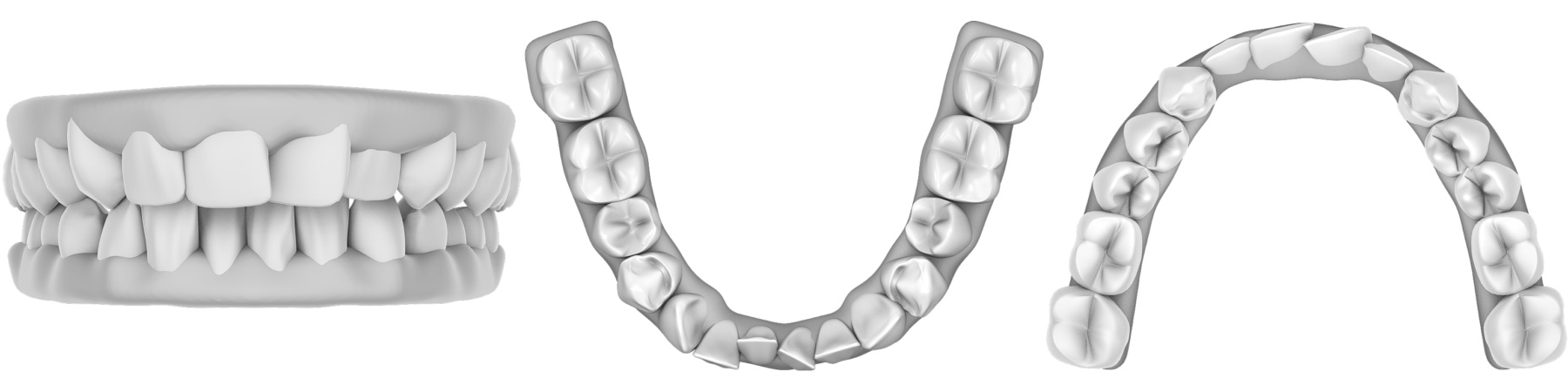
Front teeth and canines in particular can be aligned in a very controlled way with the WIN appliance. This is especially important if a truly harmonious and stable result is to be achieved.
Gaps between the teeth
With gaps between the teeth, it is not just a matter of closing visible spaces. The tooth roots must also be positioned correctly in relation to one another so that the result makes functional sense and remains stable in the long term. With WIN lingual braces, these movements can be planned and carried out reliably.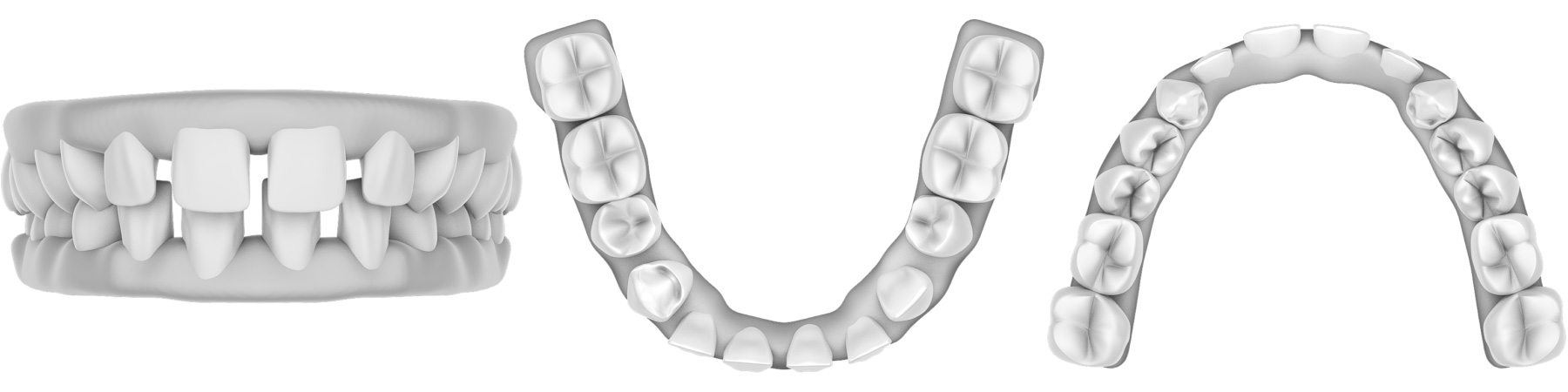
Simply closing the gap at crown level is often not enough. That is why precise root control is a key advantage of fixed lingual systems.
Lateral crossbite
With a lateral crossbite, the exact interlocking of the teeth at the end of treatment is crucial. If the teeth do not mesh precisely, the result can become unstable. With lingual braces, the upper and lower teeth can be set against each other very accurately, so that a functionally stable bite is achieved at the end.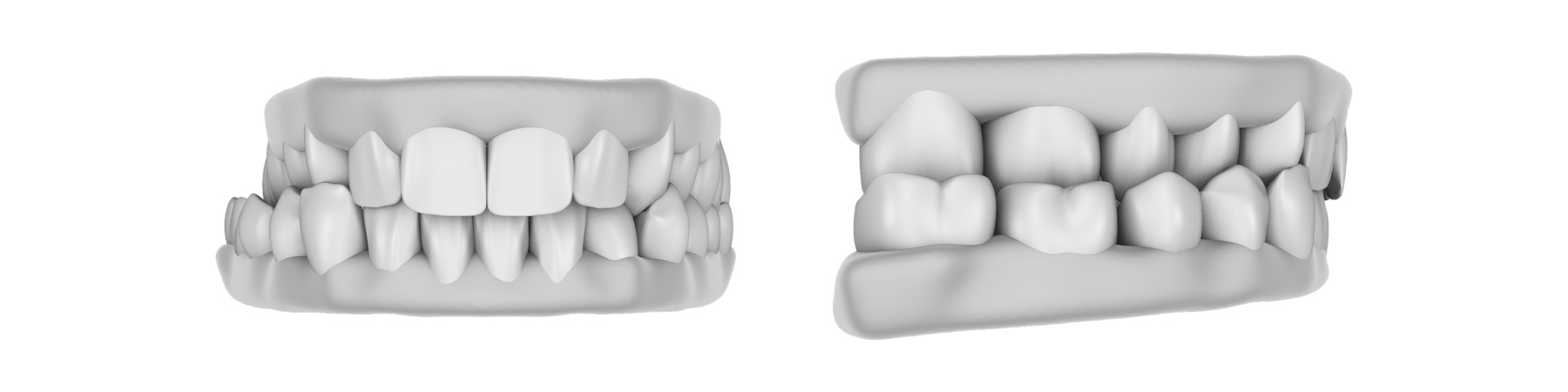
With crossbites in particular, the combination of control, precision and continuous action is a great advantage of fixed lingual braces.
Other possible misalignments
- Crooked front teeth
- Rotated individual teeth
- Deep bite
- Open bite
- Complex bite problems in adulthood
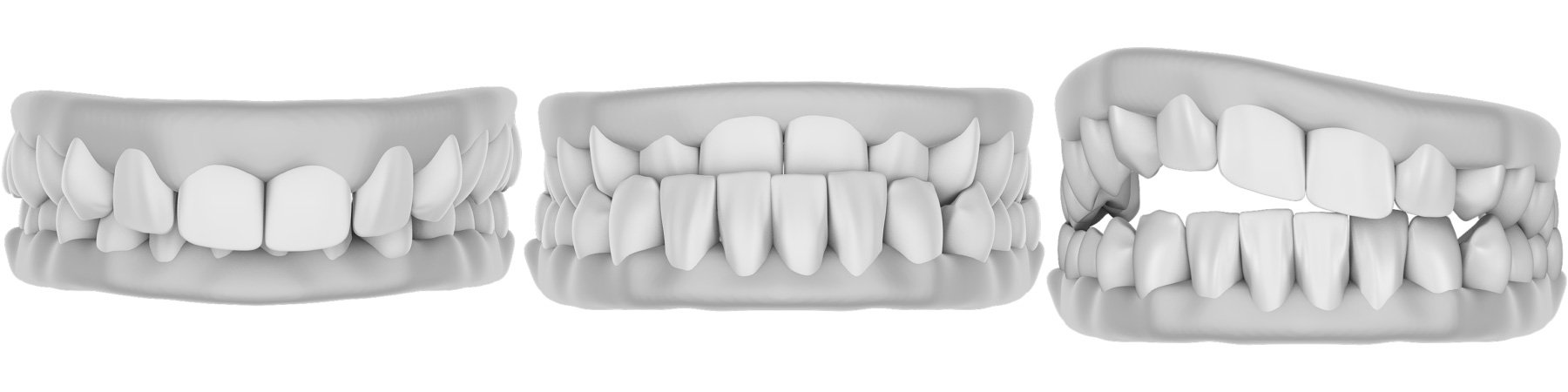 Which treatment makes sense in your specific case depends on a thorough orthodontic examination.
Lingual braces or aligners?
Many patients compare lingual braces with clear aligners. Both systems have their place in modern orthodontics. The key difference is that WIN braces are fixed and therefore work at all times, whereas aligners are removable and only work optimally if they are worn consistently.
| Feature | WIN lingual braces | Aligners |
| Visibility | Invisible from the outside | Relatively inconspicuous, but not completely invisible |
| How they are worn | Fixed | Removable |
| Effect | Active 24/7 | Depends on consistent wearing time |
| Complex tooth movements | Very achievable | Limited, depending on the case |
| Cooperation | Depends little on discipline | Depends heavily on cooperation |
At the Eltz Institut, we give you open advice on which treatment best suits your misalignment, your everyday life and your expectations.
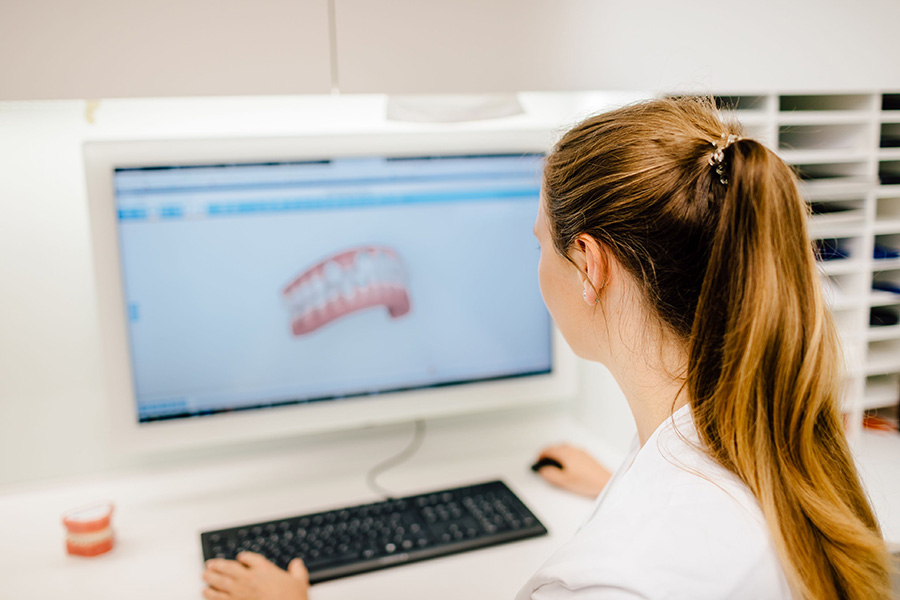
How does treatment with WIN work at the Eltz Institut?
- Initial consultation and examination
We analyse your tooth position, your bite and your wishes. We also discuss whether lingual braces are the right solution for you. - Treatment planning
Based on the examination, your treatment is planned individually. The aim is a result that is convincing both functionally and aesthetically. - Manufacture of the WIN appliance
The braces are custom-made for your teeth. - Fitting the lingual braces
The brackets are attached to the inner surfaces of your teeth. We give you detailed information on getting used to them, care and everyday life. - Regular check-ups
During treatment, we check your progress at regular intervals and adjust the appliance as needed. - Completion and retention
After the active correction, retention measures ensure that your new result remains stable in the long term.
How long does treatment take?
Treatment with WIN lingual braces often takes around 12 to 24 months. Milder cases can also be resolved in fewer months. How long the correction actually takes depends on several factors:
- The type and extent of the misalignment
- The complexity of the tooth movements required
- Your bite and the space available
- Your age and the biological response of your teeth
- How regularly you attend check-ups
At the initial consultation, we give you a realistic estimate of how your personal treatment is likely to progress.
Are lingual braces comfortable to wear?
Especially at the beginning, the tongue usually needs some time to get used to the new situation. This is normal. Thanks to the ultra-flat design of the WIN appliance, however, many patients find it quite easy to get used to. After a period of adjustment, people often hardly notice the braces in everyday life.
Your speech may also feel slightly different in the first few weeks. As a rule, this improves quickly once your tongue and muscles have adapted to the appliance.
Care and everyday life with WIN braces
With lingual braces, thorough oral hygiene is particularly important. We show you exactly how to clean your teeth and the appliance optimally. With the right technique, care fits easily into your daily routine.
- Clean your teeth carefully after every meal
- Use interdental brushes and suitable aids
- Attend regular professional check-ups
- Take care with very hard or sticky foods
- Contact the Eltz Institut promptly if you have any problems
Why WIN treatment at Eltz?
Lingual braces are a demanding orthodontic treatment that requires experience, precision and careful planning. At the Eltz Institut, you benefit from modern, specialised care and individual treatment planning.
- Focus on aesthetic and functional results
- Individual advice instead of a standard solution
- Modern, high-precision orthodontics
- Inconspicuous treatment for teenagers and adults
Our goal is not just any correction, but a result that convinces in function, stability and aesthetics.
Frequently asked questions about WIN lingual braces
What is the difference between lingual braces and normal fixed braces?
The key difference lies in the position and manufacture of the brackets and archwires. With lingual braces, they sit on the inner surfaces of the teeth and are therefore not visible from the outside. They work in the same way as fixed braces, with precise tooth movements transmitted by robot-bent archwires.
Are WIN braces really invisible?
They cannot be seen from the outside because they are attached to the inner surfaces of the teeth. This makes them one of the most inconspicuous options for correcting teeth with fixed braces.
Who are lingual braces particularly suitable for?
Above all for teenagers and adults who value aesthetics and at the same time want reliable, fixed treatment.
Can more complicated misalignments also be treated with WIN?
Yes – with moderate to severe misalignments in particular, the precise three-dimensional movement of crowns and roots can be a great advantage. Whether your case is suitable has to be examined individually.
How long does it take to get used to them?
The first few weeks can feel unfamiliar, especially for your tongue and pronunciation. Usually, however, you get used to them quickly. The flat design of the WIN appliance supports comfort.
Does the treatment hurt?
As with other orthodontic treatments, a feeling of pressure and sensitivity of the teeth when biting may occur, especially after fitting or after adjustments. This is usually temporary and part of the tooth movement.
How long does treatment with WIN take?
Treatment often takes around 12 to 24 months. For smaller tasks (e.g. resolving crowding), we can achieve success after just a few months. The actual treatment time depends on your individual starting situation.
Can I speak normally with lingual braces?
At first, your pronunciation may be slightly different. However, most patients get used to it quickly.
Are WIN braces better than aligners?
That depends on the individual case. WIN offers the advantages of fixed, invisible treatment that works continuously. Aligners can also be a sensible choice in some situations, but they require very good cooperation.
How often are check-ups needed?
Check-ups take place at regular intervals (approx. every 4–8 weeks). Exactly how often depends on your treatment plan and on how your correction is progressing.
Are WIN lingual braces also suitable for children and teenagers?
Yes, depending on the starting situation, treatment can also make sense for children and teenagers. At the consultation, we clarify whether this type of brace suits the patient's age, the misalignment and the treatment plan.
Your path to invisible braces at Eltz
WIN lingual braces are the right choice for anyone looking for invisible, lingual and at the same time highly precise braces. At the Eltz Institut, we advise you individually and honestly on whether this treatment is suitable for you.
If you would like to have your misalignment corrected discreetly, efficiently and professionally, book your personal consultation at the Eltz Institut now.
The consultation about lingual braces (fitted behind the teeth) at Eltz is free of charge for you. You are welcome to arrange your appointment by phone on 01 358 31 00 or via the online booking below.