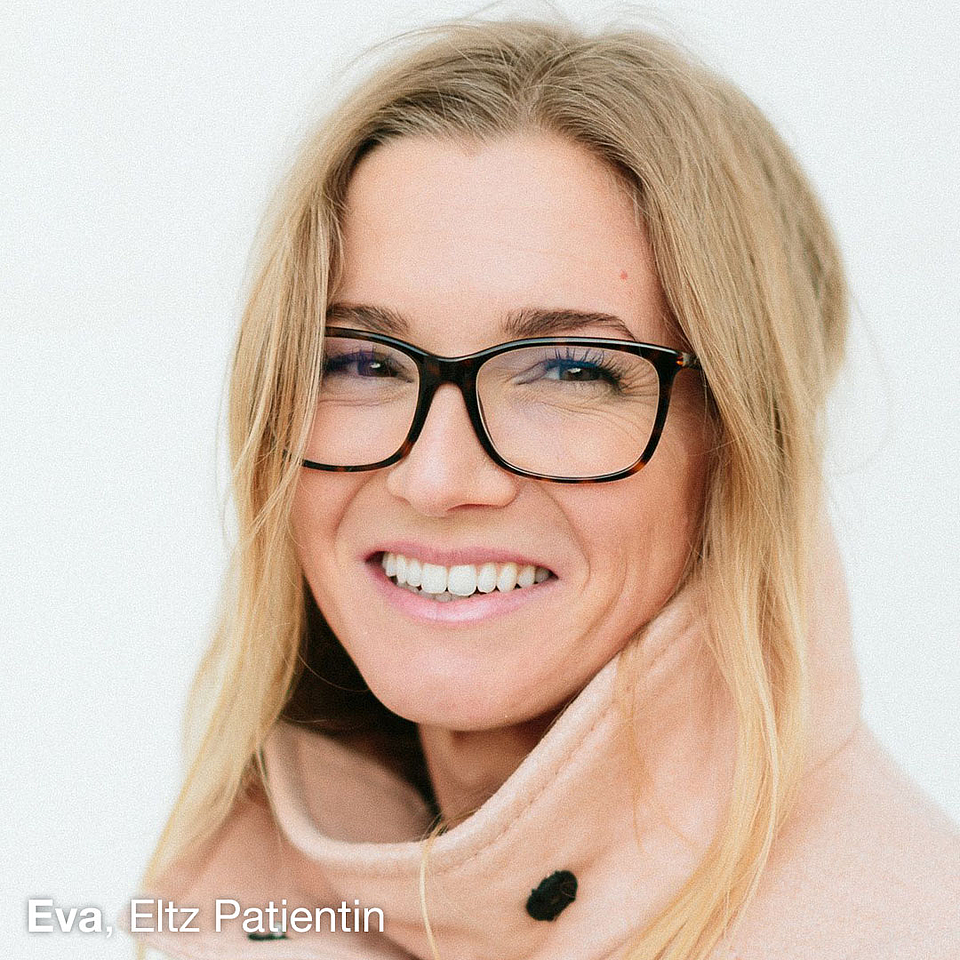
Invisible braces for adults aged 50 and over
A steadily growing number of adults are opting for braces – and not just for aesthetic reasons. The desire for straight teeth and a correct bite is more than a passing trend: it reflects the expectations of older people in particular, who, alongside the visual benefits, place ever greater value on the health of their teeth, jaws and mouth in order to keep their teeth for as long as possible.
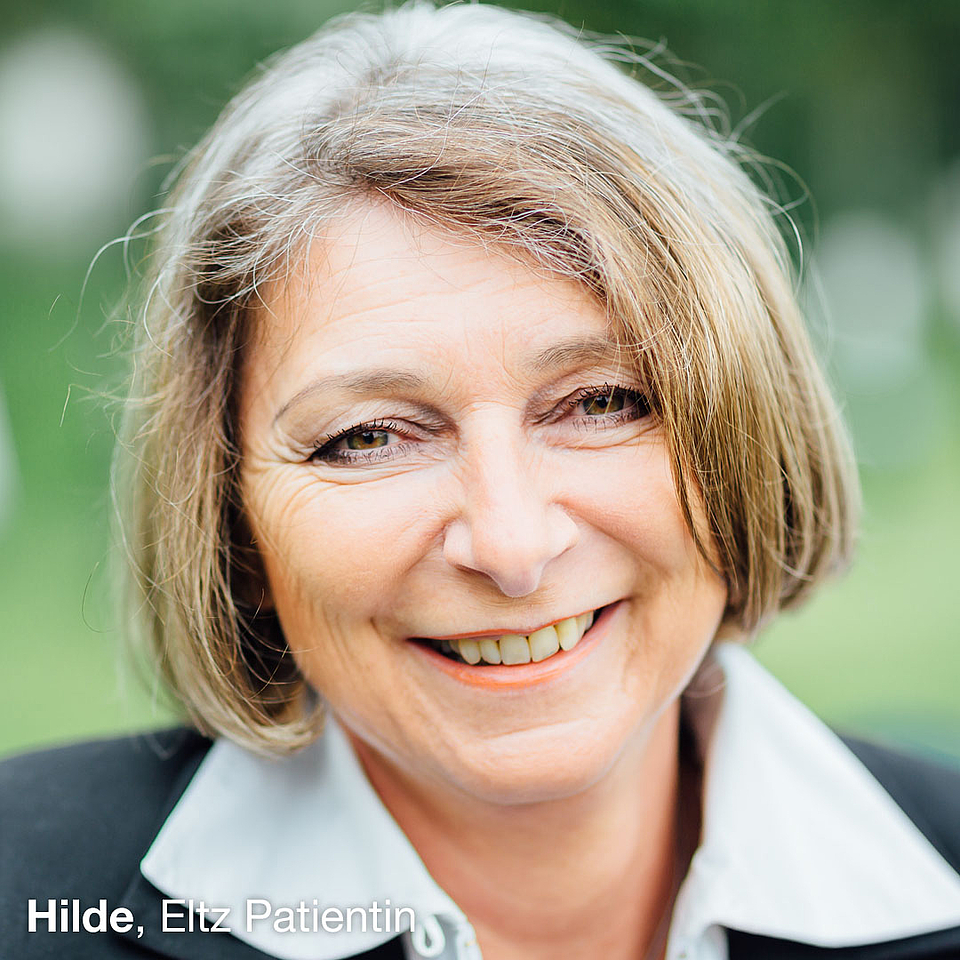
Because it’s never too late – and that applies to orthodontic treatment too, in fact especially so. Thanks to state-of-the-art orthodontics, your teeth can be straightened with innovative, almost invisible braces even later in adult life.
Braces at 50, 60, 70, ...? Is it worth it?
Beyond 50, many physical changes become noticeable, and this is also reflected in the structure of the mouth:
- as a result of a lifetime of strain on the teeth, adults often experience tooth migration: the bone changes over the course of life and the teeth move more. The teeth come to overlap one another. This creates clearly visible crowding, which also causes problems with oral hygiene.
- bone loss in the jaw can push the teeth inwards, which can affect speech
- in addition, at the age of 50 and over it is not unusual for the teeth to wear down from chewing over time and for a "gappy" set of teeth to develop through the loss of certain teeth
Braces at 50 – not just for cosmetic reasons
Damaged, crooked teeth and malocclusions are not only a cosmetic problem, they can also lead to health complications for the teeth: starting with the fact that crooked teeth are harder to clean, so more plaque builds up, there is – besides inflammation in the mouth – also an increased risk of the following medical problems:
- Tooth decay
- Enamel erosion
- Inflammation around the necks of the teeth
- Headaches
- Jaw joint pain
When a malocclusion causes pain
According to a study from 2011, it is malocclusions in particular that force adults into orthodontic treatment. Patients with a deep bite, in which the upper teeth completely cover the lower teeth, almost always have problems with the jaw joint, which connects the jawbone to the skull. (Read more here about the different types of malocclusion.) As soon as we correct the bite with braces, the pain usually disappears as well.
Braces: for oral health
The mouth is like a window to your general health. According to studies, if the oral cavity or the gum tissue is inflamed, there is an increased risk of cardiovascular disease. Orthodontic treatment can improve not only the function but also the health of the mouth. What’s more, successful treatment benefits not only your mouth but your overall physical health.

Braces at any age
The thought of having to wear braces at 50 may seem strange at first. But if you suffer from crooked teeth or a malocclusion, the effect on your quality of life is not only psychological. In the long term, the health problems will not disappear – they will rather get worse.
Many orthodontic problems can still be treated easily later in adult life. In fact, the scope of orthodontic options depends more on your general and oral health than on your age: as long as your gums and teeth are in good condition, orthodontic treatment is possible. Nowadays, at the age of 50, we are still in good health. This is a good time to think about orthodontic treatment that makes it easier for us to keep our natural teeth for the rest of our lives. Because the best teeth are our own teeth.
Discreet and effective thanks to Invisalign technology
Are you reluctant to wear braces at 50 plus for aesthetic reasons?
Don’t worry. Thanks to innovative, almost invisible techniques, orthodontics today offers far more treatment options than it did a few years ago.
We know from experience that adult patients in particular value discreet, inconspicuous and gentle correction with transparent, removable aligners. Thanks to the invisible Invisalign method, the new generation of braces reduces all aesthetic and psychological concerns and delivers excellent results: high-quality, almost invisible aligners gently move the teeth or the jaw into position. They are lighter, more affordable and more discreet than ever before.
Your advantages with state-of-the-art Invisalign:
- Little to no visual impact
- comfortable to wear, as there are no wires or brackets
- removable, custom-made aligners that slide over the teeth
With this modern Invisalign technology, we have found an ideal solution for giving you a beautiful smile again.
Invisalign wearing time
The aligners must be worn for between 20 and 22 hours a day; they are taken out for eating and caring for your teeth. Every second week, a new aligner is put in to continue the correction; each one is created beforehand for its stage of treatment using computer-aided technology. Check-ups at our practice are needed every 6–8 weeks.
How long does braces treatment take?
Depending on how complex the treatment is, the braces are usually worn for a period of 12–18 months.
With our many years of expertise and great commitment, we are able to meet our patients’ individual needs and achieve aesthetic orthodontic results.
Happy Moment: after the braces
At the end of orthodontic treatment, patients have the opportunity to capture their new smile in a professional photo shoot. You can find a selection of photos here.