Frequently asked questions about aligners
Treatment with invisible aligners, such as the Invisalign method or Angel Aligner, is one of the most straightforward solutions in modern orthodontics. Even so, there are questions that come up again and again for our patients in everyday life. Here we answer the most common questions about aligners.
1. Can hot drinks warp the aligners?
No, the aligners are made of a durable plastic and sit firmly on the teeth. Normal hot drinks such as coffee or tea will not deform the aligners. However, it is advisable to take the aligners out while drinking, as hot liquids can cause discolouration.
2. Can I use an electric toothbrush during aligner treatment?
Yes, you can use an electric toothbrush without any problems, even if you have so-called attachments on your teeth. These help to move certain teeth in a targeted way and are not affected by the electric toothbrush.
3. Can my child also be treated with aligners?
Yes, there are special Teen aligners for children and adolescents. These are designed to support tooth movement during growth. They also have a monitoring feature that allows the doctor and the parents to track whether the aligners have been worn enough.
4. How can I tell that an aligner is not fitting properly?
If the aligner does not sit fully on all the teeth at the back or the front, this may be a sign that it is not yet seated correctly. This often shows at the lateral incisors. If “saliva bubbles” form between the aligner and a tooth, this could also indicate that the aligner is not fitting optimally.
5. What can I do if an aligner does not fit?
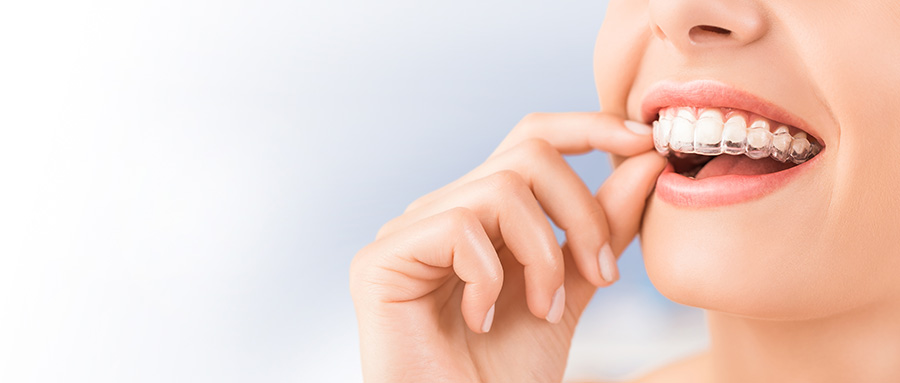
If an aligner does not fit properly, you can use the blue occlusion trainer several times a day to bring it into position. If this does not help, we recommend bringing your check-up appointment forward, so that adjustments can be made or new aligners ordered if necessary.
6. Is lifelong retention necessary?
Yes, teeth move throughout life, just as our hair keeps growing. To preserve the beautiful result of your orthodontic treatment in the long term, lifelong retention with a retainer or an aligner is necessary. This prevents the teeth from drifting back to their original position.
7. What should I do if I cannot wear my aligners for a few hours?
If you are unable to wear your aligners for a few hours, simply put them back in as soon as possible. If the aligner still does not fit perfectly at the end of its scheduled wearing period (usually 14 days), extend the wearing time by one or two days to make up for the missing time.
8. How often do I need to come in for check-ups during aligner treatment?
As a rule, check-up appointments are needed every 10–12 weeks. At these appointments we check your progress and make sure that the tooth movements are going as planned. Between appointments you receive several aligners, which you change yourself at regular intervals.

9. Can I eat and drink normally during aligner treatment?
Yes, one of the biggest advantages of aligners is that you can simply take them out to eat and drink. There are no restrictions on what you eat, and you can keep your normal eating habits.
10. Can I do sport during aligner treatment?
Yes, you can do sport without restriction. For contact sports with an increased risk of injury, however, we recommend taking the aligners out or wearing a special sports mouthguard.
11. Do the aligners turn yellow over time?
The aligners are made of a special transparent plastic. To avoid discolouration, you should take them out while eating and drinking (except water) and clean them regularly. Special cleaning tablets and solutions are available for this, and we provide them for you.
12. Can I use aligners if I already have a bridge or crown?
Yes, in many cases aligners can also be used for patients who already have bridges, crowns or implants. At your initial consultation we check individually whether this existing dental work will affect the treatment.
13. How long do I need to wear the aligners each day?
To achieve the best possible result, the aligners should be worn for 20–22 hours a day. They should only be taken out for eating, drinking and oral hygiene. This ensures that your teeth are moved continuously and that the treatment is as efficient as possible.
14. What happens if I lose an aligner?
If you lose an aligner, the best thing to do is to put the previous aligner back in to stabilise the tooth movement and contact us immediately. In many cases we can quickly have a new aligner made for you, so that your treatment is not interrupted.
15. How much does aligner treatment cost?
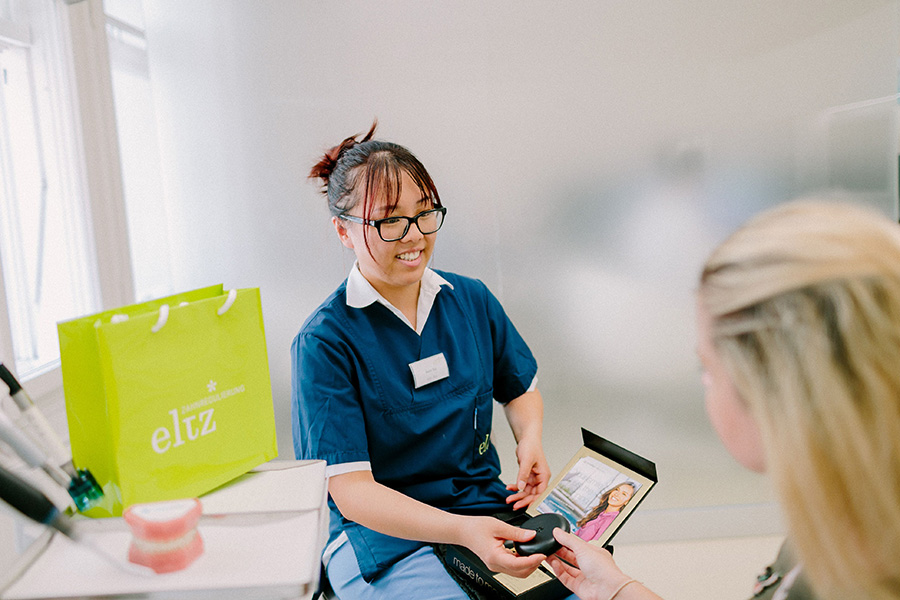
The cost of aligner treatment varies depending on the complexity of the case. At the Eltz Institut we offer transparent flat-rate prices that are independent of the length of treatment. We also offer flexible interest-free instalment plans so that treatment remains accessible to everyone.
16. More questions about aligners?
If your question has not been answered here, you are welcome to contact us by phone or via the contact form on our website. Our team will answer all your questions about Invisalign, Angel Aligner and other aligners as quickly as possible!
Tips & tricks for invisible aligners
Treatment with invisible aligners is a comfortable and aesthetic solution, but there are a few tricks that make care and handling even easier. Here we regularly share helpful tips – from the best way to clean your aligners to practical emergency solutions if something goes wrong.

Tip 1: Keep your old aligner!
Whenever you switch to the next aligner, you should carefully clean, dry and safely store the old one. This is your backup in case you ever lose your current aligner. In that case you can wear the old aligner temporarily until the replacement has been made. In some situations it is also possible to move straight on to the next aligner – contact us and we will help you!
Tip 2: What to do if your aligner rubs
If the edges of the aligner are rough and scratch your gums, there is a simple solution: use a fine nail file to carefully smooth the edges. Take care not to file off too much, and keep trying the aligner on in between to make sure it fits comfortably.
Tip 3: Aligner cleaning tip – no toothpaste!
Do not use toothpaste to clean your aligners! The abrasive particles in toothpaste can make the aligners dull and less transparent. Instead, we recommend:
- Retainer Brite cleaning tablets,
- a 50:50 vinegar and water mixture or
- a denture cleaner.
Leave the aligners to soak in the cleaning solution for about 15 minutes, and they will be clean and clear again.
Tip 4: Quick cleaning on the go
If you are out and about and do not have a special cleaning solution to hand, simply rinse the aligner with cold water. This is not as thorough as a proper clean, but it does at least remove coarse debris. Avoid water that is too hot, as this could warp the aligners.
Tip 5: Emergency tip – lost an aligner?
Invisible aligners are easy to lose, especially if you take them out to eat in a restaurant and wrap them in a napkin. If you lose an aligner, stay calm and follow these steps:
- If you have only been wearing the aligner for a short time, put the previous aligner back in.
- If you have already been wearing the aligner for longer, try using the next aligner.
In any case, you should contact us immediately so that we can help you find the best solution.
Tip 6: Storing your aligners – always carry the protective case
Always use the aligner case provided to store your aligners when you take them out. This prevents them from getting lost or damaged. A simple rule of thumb: if the aligners are not in your mouth, they should be in the case!
Tip 7: Clean your aligners regularly
Clean your aligners at least twice a day – ideally in the morning and in the evening – with a soft toothbrush and clear water. This removes bacteria and food debris and keeps the aligners transparent. For a more thorough clean, use special cleaning solutions or tablets regularly.
Tip 8: Keep wearing your aligners, even if they feel tight
If you feel slight pressure when wearing your aligners, that is normal – it means the aligners are doing their job. Try to keep wearing them for the recommended 20–22 hours a day. If you experience severe pain, however, contact us so that adjustments can be made.
Tip 9: Take your aligners out when drinking
To avoid discolouration, you should take your aligners out when drinking coloured drinks such as coffee, tea or juice. Water is the only exception that you can also drink with the aligners in. Otherwise the aligners could become discoloured, or liquid could be trapped between the aligners and your teeth, which could promote tooth decay.
Tip 10: Always keep an eye on your wearing time
The aligners should be worn for 20–22 hours a day to achieve the best results. Any reduction in wearing time can make the treatment take longer. Use an app or a watch to keep track of your wearing times – this way you can make sure your tooth correction progresses as efficiently as possible.
Tip 11: Dry mouth during aligner treatment
Wearing aligners can sometimes lead to a dry mouth. To counteract this, drink water regularly. Avoid sugary drinks, as these can increase the risk of tooth decay.
Tip 12: Patience is key
Sometimes it takes a little longer for your teeth to be moved fully into the desired position. Be patient and stick to the recommended treatment plan. Trust the process – the results will be worth it!

Do you have any more questions about invisible aligners?
If you have any further questions about your aligners or your treatment, feel free to call us or use the contact form on our website. Our team is always there for you with helpful tips and answers!